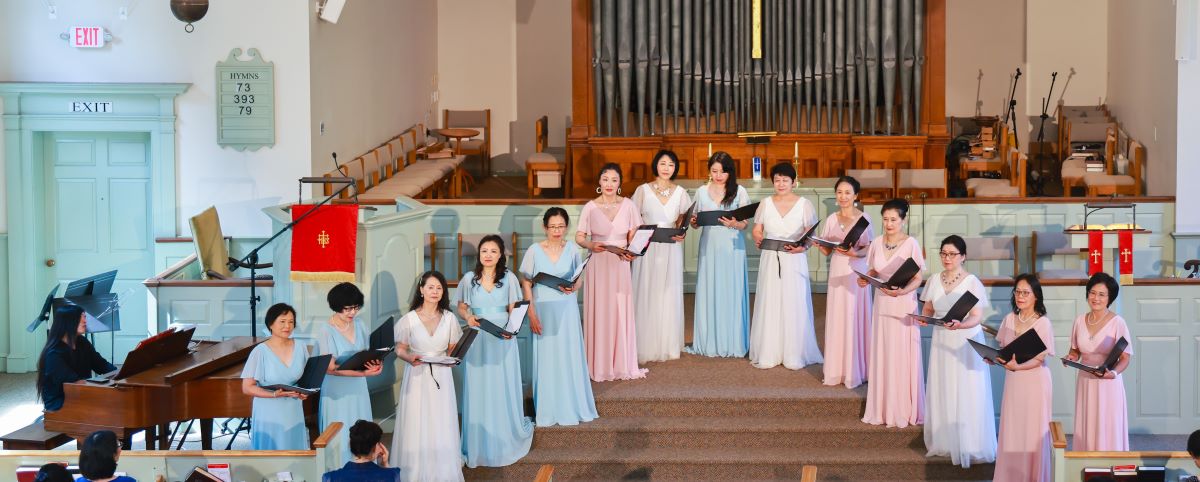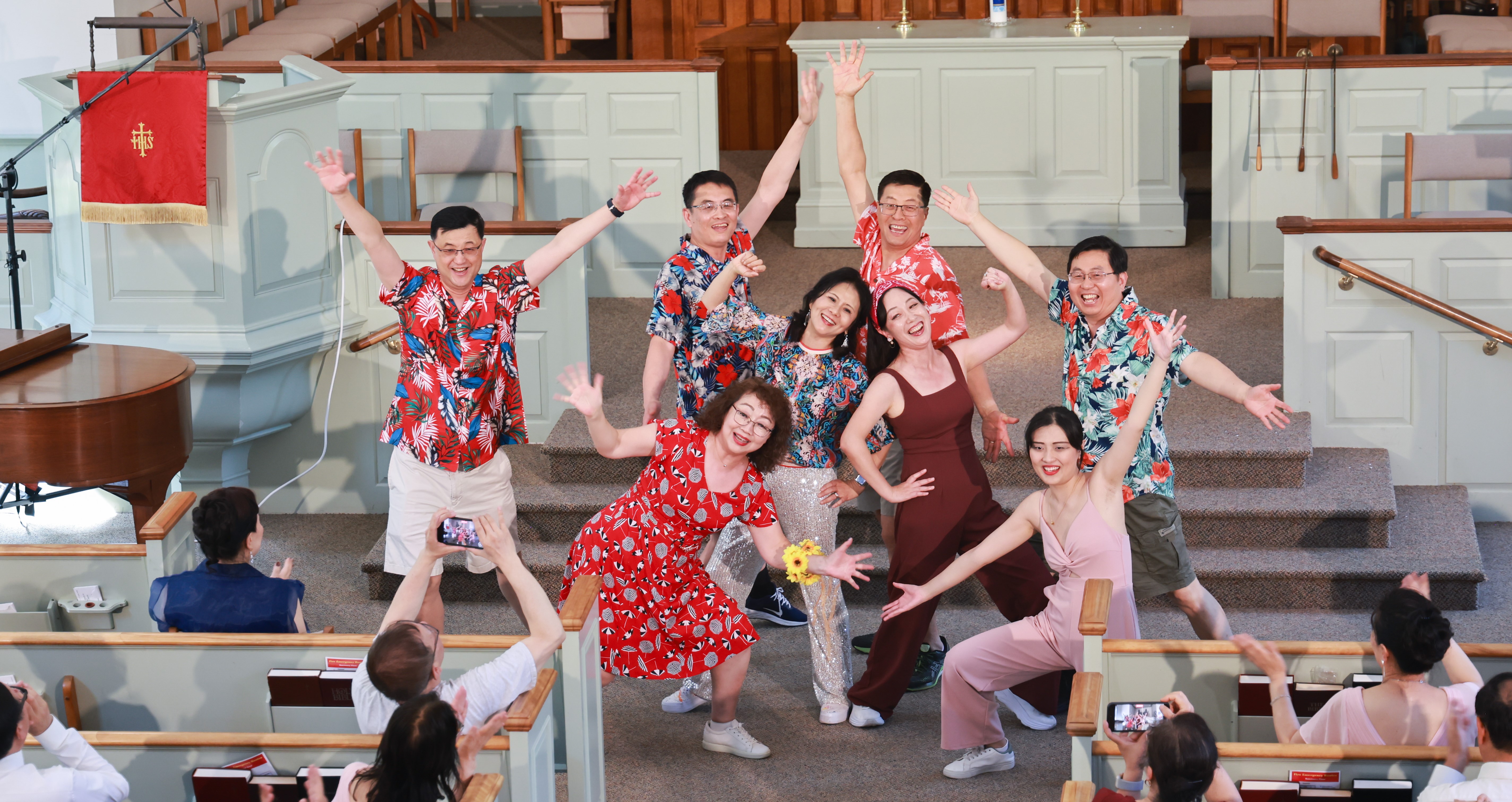

“Dream of the Red Chamber” Suite Concert
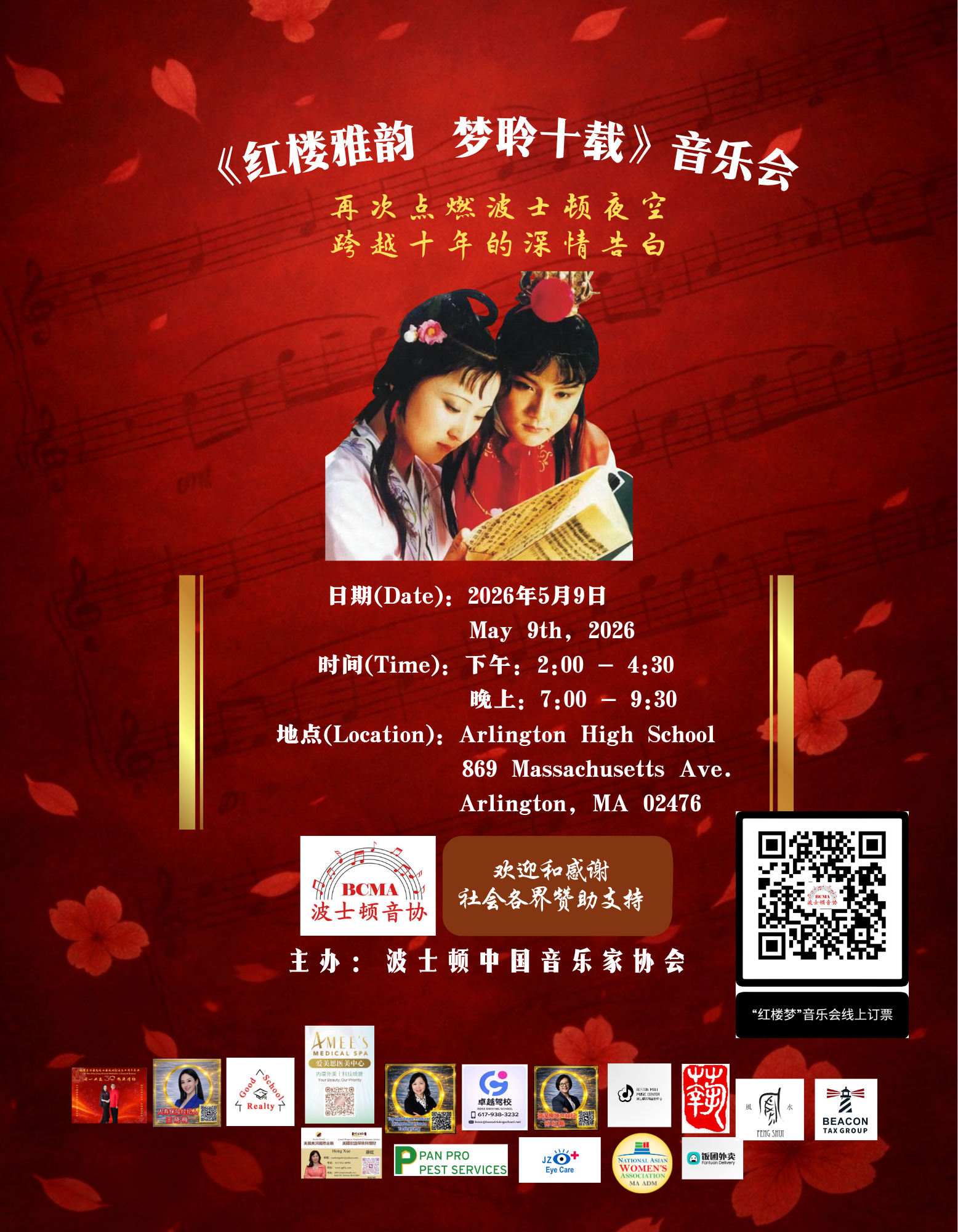
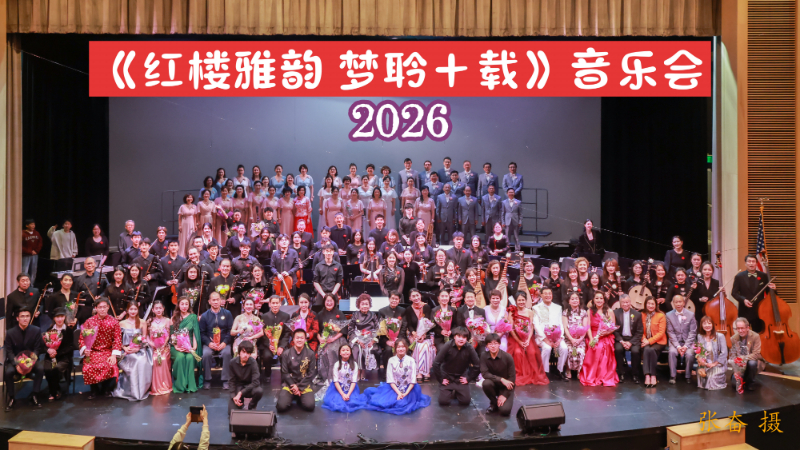
A Dream of Red Mansions Suite is adapted from the beloved soundtrack of the 1987 television series A Dream of Red Mansions. Its lyrics are drawn directly from the original novel written by Cao Xueqin, with music composed by Wang Liping. In 2016, the Boston Chinese Musicians Association Orchestra and Choir performed 11 songs from the suite, which were arranged by composer and conductor Zhang Lie. In 2026, the Boston Chinese Musicians Association Orchestra and Choir will present the complete A Dream of Red Mansions Suite, marking its 10th anniversary and honoring Maestro Guo Tiansheng through this collaborative performance of a timeless classic.
1) Overture to A Dream of Red Mansions
The overture serves both as a beginning and a synopsis. The music is the main theme of the television series, built primarily around the melodies of “Wang ning mei” (“Vain Longing”) and “Zang hua yin” (“The Flower-Burial Song”). Ethereal and far-reaching, it leads the audience into the dreamlike world of A Dream of Red Mansions—a realm where “Pages full of fantastic talk – Penned with bitter tears; All men call the author mad, none his message hears.” (滿紙荒唐言,一把辛酸淚,都云作者癡,誰解其中味)
2) Song of Ziling Isle
Song of Ziling Isle appears in Chapter 79 of the novel and was written by Jia Baoyu mourning the empty space left by his cousin Yingchun after her betrothal to the “Mountain Wolf” Sun Shaozu. Yingchun, the second daughter of the Jia family, is “given” by her father Jia She to Sun Shaozu, and after marriage she suffers severe abuse, until ultimately “Fair bloom, sweet willow in a golden bower; Too soon a rude awakening awaits her.”( 金閨花柳質,一載赴黃粱) Baoyu is powerless to prevent her marriage and can only watch as the grand mansion falls into decline. Through Song of Ziling Isle, he expresses his sorrow over the family’s downfall and the heartbreaking dispersal of the family members.
Wang Liping’s setting intensifies the poignancy of the original poem. Employing the YU (羽) mode (with a minor tonal color), the melody is somber and desolate. Featuring the xiao and guzheng, the music evokes the chill of autumn winds and the cold ripples of water. This piece serves as Baoyu’s elegy for his family’s decline and as the author’s critique of feudal marriage traditions. The music
deepens its sense of bleakness, making the image of “autumn winds sweeping over the lotus” a symbolic miniature of the novel’s overarching theme of deterioration.
3) Song of Red Beans
Red beans traditionally symbolize longing. Song of Red Beans is drawn from Chapter 28 of the novel, where Jia Baoyu sings it during a drinking game. Though he composes it on the spot, the lyrics reflect his true feelings towards Lin Daiyu. His unspeakable love and inexpressible yearning for Daiyu accumulate within him—twisting and surging with intensity—only to resolve in the wistful image: “Like the shadow of peaks, her grief is never gone; like the green stream it flows for even on.” (恰便似遮不住的青山隱隱,流不斷的綠水悠悠).
Because the song resembles the light, impromptu style of a street-side drinking tune, the music incorporates elements of various folk traditions and regional operatic styles. In the drama, Baoyu sings while tapping bowls and dishes as percussion, adding a distinctive and memorable character to the piece.
4) Song of Qingwen
Song of Qingwen is based on the prophetic poem describing Qingwen, a maid in the Jia household. Sold into servitude as a child, Qingwen is nonetheless strikingly beautiful, quick-witted, and outspoken. She refuses to curry favor and is unafraid to go against the status quo; an ordinary, yet admirable figure worthy of being sung about.
The music’s smooth, fresh melodic lines vividly portray how her “heart is loftier than the sky”(心比天高) and her “charm and wit,”(風流靈巧) while a subtle heaviness hints at her tragic fate, captured in the lines: “Her early death is caused by calumny, in vain her loving master’s grief must be.” (壽夭多因誹謗生,多情公子空牽念). Notably, lively rearrangements of this theme are also used during festive gatherings in the Jia household, lending those scenes a gentle atmosphere of joy and ease.
5) Lament for Qin Keqing (The Grand Funeral Procession)
Lament for Qin Keqing (The Grand Funeral Procession) is inspired by the lavish funeral scene following Qin Keqing’s death in the novel. It originates from composer Wang Liping’s score for the 1987 television series adaptation and stands as one of the most powerful and tragically beautiful sections of the series’ music.
Qin Keqing is a mysterious and symbolically rich figure in the novel. Although she dies early in the story, her identity, experiences, and death carry profound
allegorical meaning and remain enveloped in unanswered questions. After her passing, the Ningguo household stages an extraordinarily extravagant funeral—described as a spectacle unseen in a hundred years. This scene epitomizes the decaying grandeur of the Jia family: gilded on the surface yet already showing unmistakable signs of decline.
The composition blends elements of traditional Chinese funeral music, court music, and symphonic writing. Majestic in scale and deeply expressive, it is mournful without being overwrought. • The opening is solemn and elegiac: the erhu and low strings create an atmosphere of grief and heaviness, reflecting the sorrow within and beyond the Jia household. • The middle section erupts with ceremonial grandeur: drums and gongs resound, depicting the opulence and spectacle of the funeral procession, tinged with a sense of hypocrisy and emotional detachment. • The conclusion gradually descends into desolation: the music retreats into darker tones, revealing the emptiness beneath the display and foreshadowing the family’s inevitable downfall.
Qin Keqing’s lavish funeral becomes a symbol of the Jia clan’s final, fleeting brilliance—its last glimmer before extinction. Wang’s music captures this tension between splendor and decay with exceptional clarity and emotional depth.
6) Granny Liu
Granny Liu is one of the most distinctive and memorable characters in the novel. An elderly woman from the countryside, she comes from a poor background and has no direct blood ties to the Jia family. Because of a distant familial connection with Wang Xifeng, she visits the Jia family hoping for a bit of assistance or alms—a classic example of “seeking favors from the wealthy.” As a grassroots figure, she is vivid, humorous, down-to-earth, and beloved by readers.
This piece primarily draws on the music used in the television series during Granny Liu’s visit to the Daguan Yuan (A grand garden of the Jia family). The scoring features traditional folk instruments such as the suona, sheng, and sanxian. With its lively rhythms and comical melodic turns, the music highlights her rustic yet endearing charm. The playful, folk-inspired style underscores her simple, humorous personality and the refreshing authenticity she brings to the otherwise aristocratic world of the Jia family.
7) Poems on the Embroidered Handkerchief (Three Verses on a Handkerchief)
Three Verses on a Handkerchief is drawn from Chapter 34 of the novel in which Lin Daiyu, moved by Jia Baoyu’s gift of a handkerchief, composes three seven-syllable quatrains. The handkerchief becomes a poetic vessel through which
Daiyu expresses her deep affection for Baoyu, her sorrow over her own fate, and the loneliness of living as a dependent in another home. These poems distill the tragic essence of Baoyu and Daiyu’s relationship, elevating their private emotions into a lament against destiny itself. Through the imagery of tear-stained silk, the author foreshadows Daiyu’s ultimate end: dying when her tears are exhausted, and reinforces the novel’s overarching theme of pervasive sorrow: “Thousand Red Flowers in One Cavern (a homophone for Crying), Ten Thousand Beauties in One Cup (a homophone for Sorrow, Tragic)”(千紅一窟[哭],萬艷同杯[悲]).
The music is imbued with an oriental sense of melancholy and wistfulness. Built on a pentatonic foundation with the YU mode, its melodic lines are subtle and winding, echoing the cadence of classical verse. The harmony is spare; tremolos evoke trembling sobs; and the vocal style blends full voice, breathy tone, and operatic inflections for heightened emotional color. Centered on the motif of “tears,” the composer transforms Daiyu’s “poetic handkerchief” into an aural one—a handkerchief of sound. Through plaintive melody, cool timbral coloring, and an enigmatic structure, the music captures Daiyu’s solitary, delicate spirit— “a tender heart known only to itself.”
8) Vain Longing (Wang Ning Mei)
Vain Longing is the third of the “Twelve Songs of a Dream of Red Mansions,” which appear in Chapter 5 of the novel. It serves as a poetic portrait of the story’s two central characters. The song contrasts the idealized vision of Jia Baoyu and Lin Daiyu as the “immortal flower of the fairyland” (閬苑仙葩) and the “fair flawless jade” (美玉無瑕) with the fragile reality of their love— “the moon reflected in water,” “flowers in a mirror.” (“水中月””鏡中花”). It summarizes the essence of Baoyu and Daiyu’s tragic romance and reflects one of the novel’s principal narrative threads.
The music unfolds in three sighing phrases, gentle and lingering, inviting the listener into a realm of boundless emotion and imagination.
9) Separation from Dear Ones (Fen Gu Rou)
Separation from Dear Ones is the fifth of the “Twelve Songs of a Dream of Red Mansions,” found in Chapter 5 of the novel. It foreshadows the fate of Jia Tanchun, the Jia family’s gifted third daughter, who will ultimately be married off to a distant land—forever separated from her parents and kin. The song not only anticipates the Jia family’s impending decline and the scattering of its members but also reflects the sorrow of a talented young woman whose abilities are unrecognized and who is forced into a painful marriage far from home.
The line “From of old good luck and bad have been predestined, partings and reunions are decreed by fate” (自古窮通皆有定,離合豈無緣) reveals the fragility and helplessness of human beings when confronted with fate.
The music is slow, plaintive, and exquisitely sorrowful—each phrase is heavy with tears. The composer’s magnification of the line “I must go—do not hold me back” strikes directly at the heart, creating a powerful dramatic tension that moves listeners to tears.
10) Lament for Xiangling
This piece draws its inspiration from Xiangling’s prophetic verse in Chapter 5 of the novel. Xiangling is one of the novel’s most ill-fated women. Born into a distinguished family, she was abducted in early childhood, sold repeatedly, and eventually became the concubine of Xue Pan, a dull and brutal man. There she endured relentless humiliation and abuse at the hands of Xue Pan and his wife and ultimately met a tragic death.
Her prophetic verse employs natural imagery—such as the lotus flower and the solitary tree—as well as wordplay based on the splitting of characters, to obliquely yet profoundly allude to the course of her life and to foreshadow her tragic end. Though it was fate and circumstance that subjected her to suffering and hardship far beyond the ordinary, her nobility and kindness were innate. Like the lotus, she emerges unstained from the mud.
Musically, this piece is shaped around the mood of “lament,” its tone mournful and plaintive, evoking deep pathos. It vividly portrays this tragic figure— “Sweet is she as the lotus in flower, yet none so sorely oppressed” (根並荷花一莖香,平生遭際實堪傷) — and leaves the listener filled with sorrow and reflection.
11) The Burden of Cleverness
The Burden of Cleverness is the tenth of the “Twelve Songs of a Dream of Red Mansions” in Chapter 5 of the novel, serving to reveal the fate of Wang Xifeng. The title may also be understood as “Cleverness Misapplied”.
Wang Xifeng is a woman of sharp intelligence and formidable ability, decisive in action, yet also cruel, calculating, and adept at manipulating power. She repeatedly prides herself on her cleverness, believing she can control and scheme her way through everything, unaware that “In vain her anxious thought for half a lifetime, for like a disturbing dream at dead of night…mirth is suddenly changed to sorrow” (枉費了,意懸懸半世心;好一似,蕩悠悠三更夢) She thus becomes a classic example of one who is undone by her own cleverness.
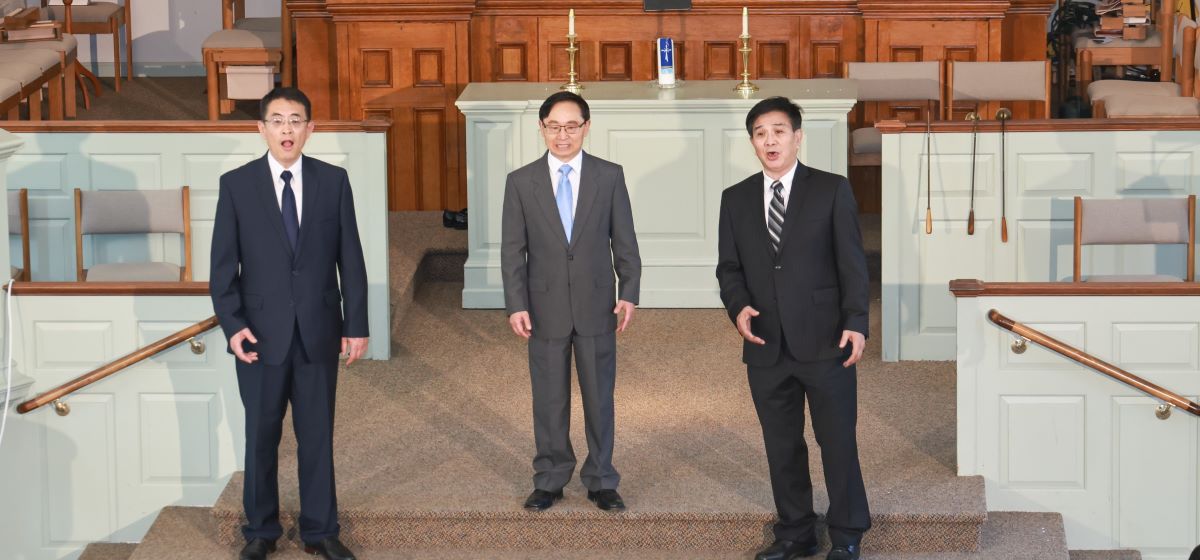
The musical setting adopts a humorous and ironic tone, using a male chorus, which echoes the original lyrics’ layered metaphors and repeated phrasing. Through this approach, it shapes the image of a “strongwoman facing the end of the world”— “This bird appears when the world falls on evil times; none but admires her talents and her skill” (凡鳥偏從末世來,都知愛慕此生才) — while at the same time voicing a lament for her ultimately tragic end.
12) Bao–Dai Love
This piece is the composer’s musical portrayal of the complex and deeply felt relationship between Jia Baoyu and Lin Daiyu: grievous and plaintive, tender and entwined, sincere yet ultimately unfulfilled. In the television adaptation, its themes appear in scenes such as their first meeting, Baoyu giving Daiyu his handkerchief, Daiyu burying fallen flowers alone, and Daiyu’s death. It is often used as background music for moments in which Lin Daiyu, weakened by illness, dwells on her feelings or sings her sorrow in solitude.
In musical form, the work condenses the tragic essence of their emotional bond. It does not merely depict a love story; it also symbolizes the fragility and disillusionment that lie beneath the Jia family’s outward splendor.
The composition is dominated by a slow tempo, with a graceful, flowing melody suffused with melancholy. Strings and flute take the lead, creating an atmosphere of “so near yet so far” and of love so deep yet unconsummated. The orchestration unfolds in layers yet remains gentle and restrained throughout—like Daiyu’s soft, confessional murmuring, or Baoyu’s unspoken grief. The main theme recurs without becoming repetitive, as if their emotions repeatedly entwine, never to be resolved. Between phrases, deliberate moments of “emptiness” are left, expressing a restrained, inexpressible affection that words cannot fully convey.
13) The Lantern Festival (Shangyuan Festival)
In A Dream of Red Mansions, the Lantern Festival is one of the liveliest celebrations in the Jia family. The “families of rank and distinction” adorn their halls with brilliant lanterns, while the “household of poetry and ritual” gathers guests in shared festivity. The novel devotes extensive passages to depicting the splendor of this occasion. The music was composed to recreate this magnificent scene, and in the television adaptation it accompanies moments such as: the fifteenth night of the first lunar month, when the Jia residence is lavishly illuminated and hosting banquets for guests; when literati are composing poetry; when Baoyu and his female cousins are admiring lanterns, playing riddles, and laughing together; and during grand assemblies filled with music and song.
At the same time, the music reveals both the outward bustle of the Jia family’s Lantern Festival and the intricate human relationships beneath it. The piece is not only rich in musical beauty, but also delicately conveys—through sound—the tension between the “surface prosperity” of a great feudal household and its “underlying crisis.” Although festive joy forms the main melodic thread, hidden within the music are minor-mode harmonies and moments of tonal ambiguity that foreshadow an “emptiness amid prosperity.” The piece uses musical elements from lantern fairs, folk dances, and the rhythms of parade drums; syncopated figures and staccato articulations are inserted to heighten the sense of celebration and movement; and numerous melodic fragments draw on the style of Jiangnan silk and bamboo ensemble music.
The Lantern Festival is also one of the few bright and animated movements in the suite, yet it remains true to the work’s overarching tone: prosperity is but an illusion, and splendor fades like drifting clouds. By presenting the Lantern Festival as the “last moment of brilliance” for the Jia family, the music creates a powerful contrast and plants the seeds for the drama’s tragic conclusion.
14) A Windy, Rainy Evening by the Autumn Window
This piece is drawn from Chapter 45 of the novel, in which Lin Daiyu, bedridden with illness in the Xiaoxiang Guan (her home), listens to the wind and rain at night and composes the poem “A Windy, Rainy Evening by the Autumn Window”. The poem consists of twenty lines, each containing the word “autumn.” Through the image of the “autumn window,” the author reflects Daiyu’s “autumn heart” (a homophone for sorrow), unfolding her grief in ever-deepening layers:
• The autumn of nature: “Sad the autumn flowers, sear the autumn grass” (秋花慘淡秋草黃) — a omen of the Daguan Yuan’s decline.
• The autumn of life: “Guttering on its stick, the candle sheds tears of wax” (淚蠋搖搖爇短檠)— life itself, fragile as a candle trembling in the wind.
• The autumn of fate: “None can tell when the wind and rain will cease” (不知風雨幾時休) — an irresolvable tragedy of the age.
Musically, the composition breaks away from the traditional pentatonic scale. Tremolo on the guzheng imitates rain striking bamboo leaves, sustained tones in the cello’s low register roll like distant thunder, vibrato notes on the erhu evoke breath so faint it seems about to fail, and the female solo voice deliberately lags by half a beat, creating a sense of exhaustion and helpless struggle. As the composer once recalled: “When I wrote this passage, I had a fever of 39 degrees
Celsius. In my delirium, I heard real rain falling outside the window—at that moment, I became Daiyu.”
15) Chant of Burying the Flowers
Chant of Burying the Flowers originates from a poem recited by Lin Daiyu in Chapter 27 of the novel. Through the imagery of "As blossoms fade and fly" (花謝花飛) the heartbroken heroine—a refined yet fragile noblewoman—voices her sorrow and existential despair, lamenting the transience of beauty, love, and life itself. The original poem is suffused with melancholy and grief, epitomized by the line: "The day that spring takes wing and beauty fades, who will care for the fallen blossom or dead maid?” (一朝春盡紅顏老,花落人亡兩不知).
The composer, however, places special emphasis on Daiyu’s act of “questioning Heaven: “Yet at earth’s uttermost bound where can a fragrant burial mound be found”, "For pure you came and pure shall go, not sinking into some foul ditch or mire” (天盡頭,何處有香丘? 質本潔來還潔去,強於污淖陷渠溝). Through sweeping, dramatic orchestration, the music transforms grief into a stirring protest of fate, interwoven with fleeting glimpses of hope—a testament to Daiyu’s unyielding spirit and her tragic idealism.
Please scan QR code for purchasing ticket: